
One score and two dozen years ago, communist China was stuck in a calamity involving almost everybody from the citizens who had even menial jobs to party dignities. These decades, including the disastrous political movements one after another since 1949, has constituted the whole figure of the miserable childhood in most middle-aged peoples’ memories. Up to this day and age, although a multitude of fictions, stories and poems accusing this absurdity have seen their light of day, never a book can be more vivid in reminiscing a personal experience with first-person description than the autobiography of an elegant and dignified lady, Nien Cheng.
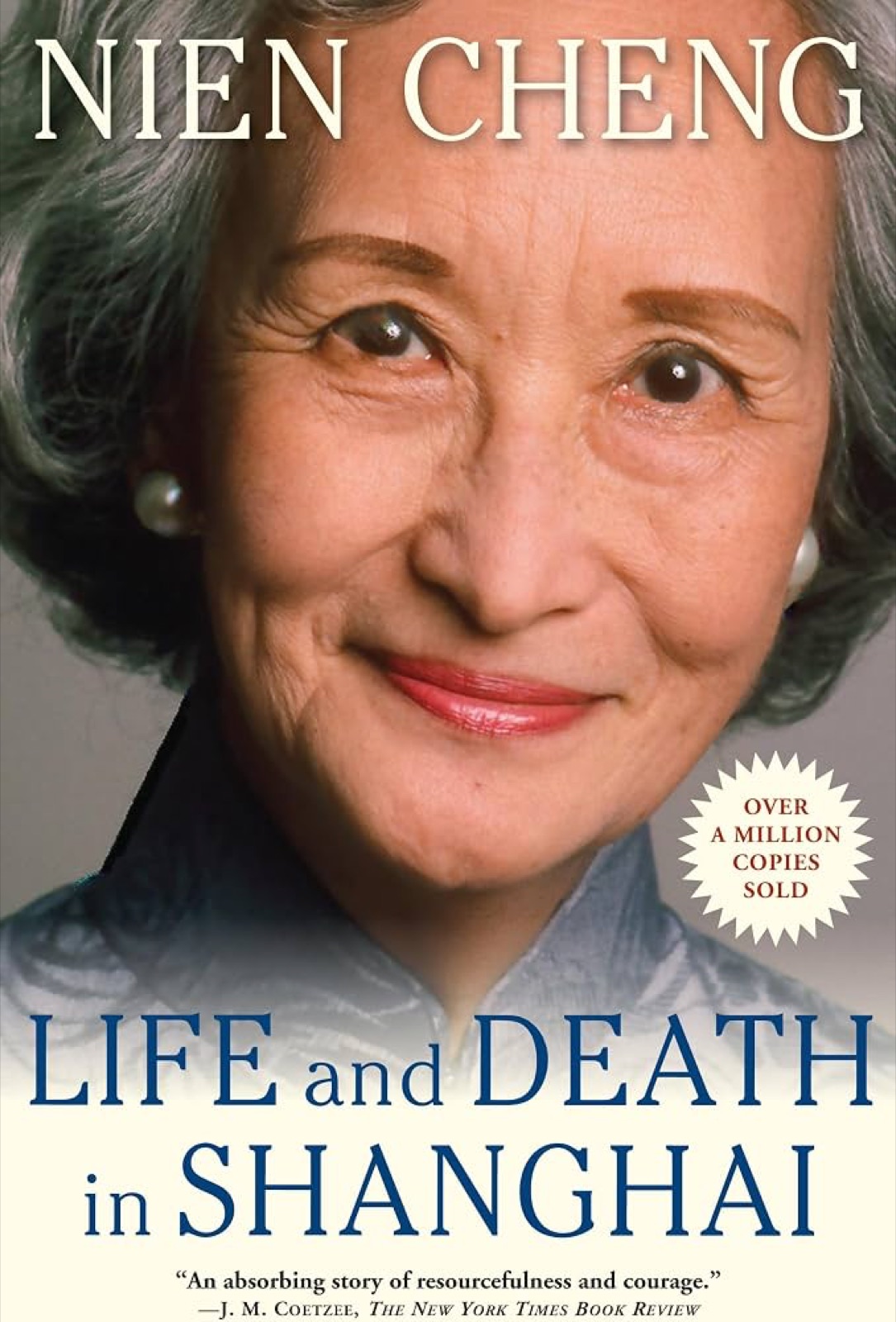
To be candid, I don’t have any knowledge about this woman, nor her book before hearing the recent news of her demise at the age of ninety-four, which is longevity in my eyes. Hardly had I been curious about the book when I finished reading a brief introduction of it as well as finding the noble and graceful portrait of the old lady on the cover. Instantly I decided to get this book to have a read. In my first thought, it is utterly impossible for me to buy this book in local bookstores selling foreign books as most of them are state-operated. As a matter of fact, the political air in contemporary China seems to be much tighter in comparison with that of twenty years ago. A same book of this kind is more likely to be published before 1989 than today. Looking to a fish out of the net, I tried to search it on my university’s library because there are tons of foreign volumes and references. Fortunately, this rare suvival book lay silently with its torn cover and yellowish pages when I positioned it on the book shelf in one school reading room.
After making acquaintance with her schoolmate, lately her husband, in London School of Economics, Nien Cheng lived in Australia and then moved to Shanghai after 1948 when the communist party came into power, as her husband was appointed the general manager of Shell in Shanghai. Even though the authority treated her well before 1965, eight years after her husband’s death of cancer, Nien Cheng, working as a successor, still suffered a great ordeal quite hard-pressed for other to imagine during the Cultural Revolution.
Since I have an inkling of a similar misfortune of my own family during that period of unrest, I developed a strong resonance with the author when reading those chapters memorizing the Red Guard’s looting of her house. In the author’s garden where fragrant flowers should have grown, numerous antiques and books were there to be burnt. So was the vast number of foreign classics at my house. Actually, I had thought about burying the precious things under the ground when I first got to know their barbaric actions, but now I realize it seemed quite impossible for the simple reason that the Red Guards would even dig the soil deeply out of the garden. What I appreciated most on Nien Cheng was the audacity she displayed when confronted with the cruel interrogators after imprisoned in the notorious No.1 Detention House where she was slandered as an “imperialistic spy”. When surrounded by a general atmosphere of madness, people can hardly keep their courage to stick to truth. However, Nien Cheng got it done, with a lofty integrity and wisdom, which, in my opinion, is a light of hope at the end of the tunnel, not only at that havoc but also at present when cynicism is in its heyday.
Although the haze floating on the sky of modern China has not faded away, yet ultimate success belongs to those who have a hope to vanquish the autocracy as well as the evil of humanity. By that time, the murder of Meiping will bound to be brought to justice.