Illumina China Localization Strategy
End-to-end localization strategy and operations redesign that transformed Illumina China's fragmented, vendor-driven translation work into a scalable, governed system delivering consistent, high-quality content for a fast-growing life sciences market.
Context#
When I joined Illumina China in 2016, the local marketing organization was scaling rapidly, but its content and localization operations had not kept pace. Nearly all marketing and technical content originated from the US headquarters, with no local content strategy, no centralized terminology assets, and no standardized workflows. Localization was fully outsourced and heavily dependent on vendors’ own translation memories, resulting in inconsistent quality, long turnaround times, and limited visibility into cost and impact.
At the same time, Illumina’s customer base in China—scientific research institutes and hospitals—relies on accurate, trustworthy, and highly specialized information. Localization quality directly affected brand credibility, regulatory confidence, and market education.
My Role#
As the localization specialist in the China marketing team, I acted as both a strategic coordinator and a hands-on practitioner. I worked across functions and regions, collaborating with global content teams, local marketing managers, domain experts, digital marketing specialists, and multiple external vendors. My role was to design a localization system that could scale with the business, while continuing to deliver high-quality localized content under real-world constraints.
Key Challenges#
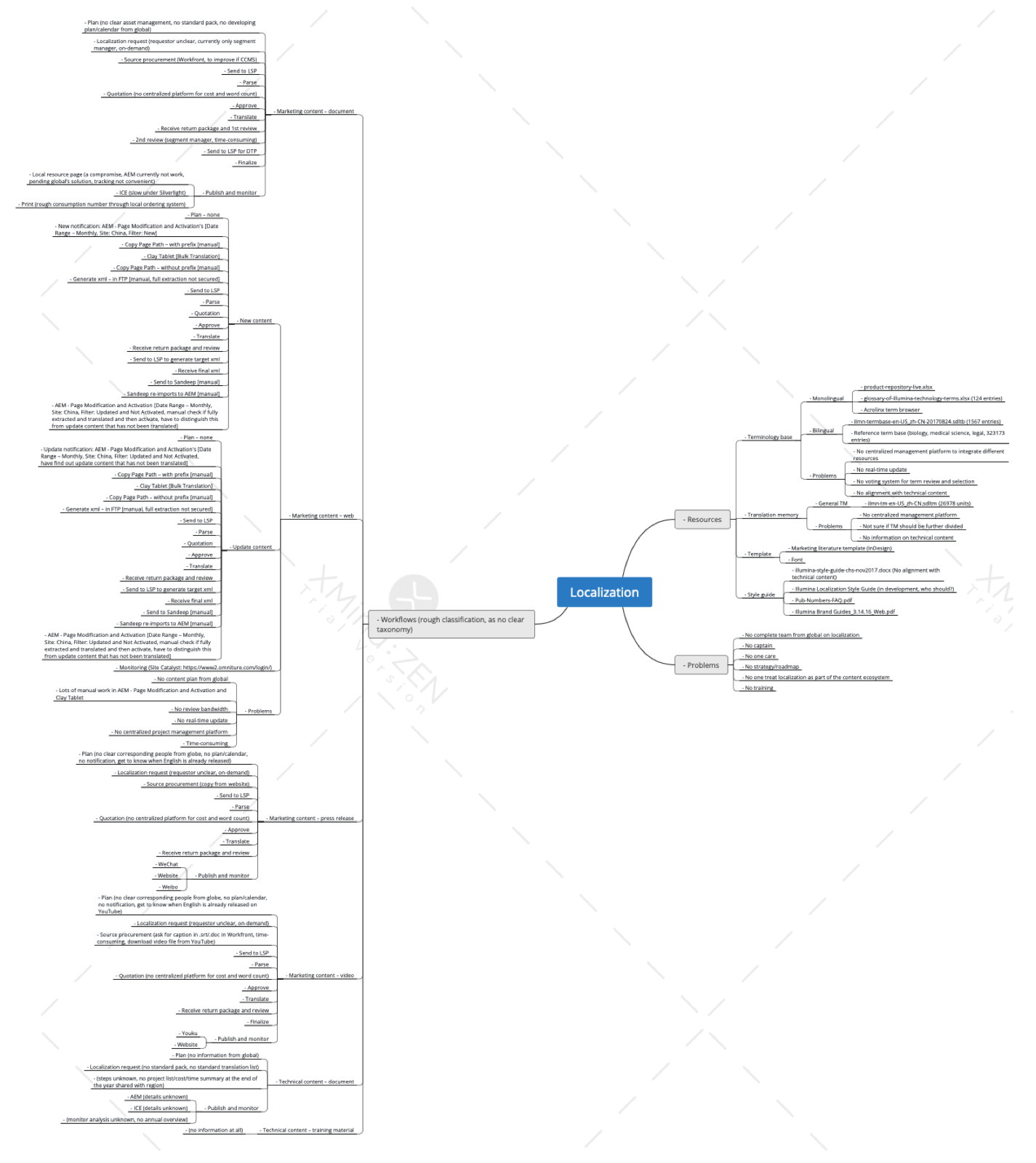
- No content strategy, taxonomy, or shared understanding of what content should be localized for the China market.
- No centralized terminology or translation memory owned by the company; assets were fragmented across vendors.
- Highly manual, PDF-based workflows with repeated proofreading after layout, increasing cost and error risk.
- Lack of observability: content usage, performance, and business value were largely invisible.
- Multiple vendors (translation, DTP, printing, events) operating without unified standards or governance.
Deliverables#
I redesigned Illumina China’s localization approach from the ground up:
- Mapped the end-to-end user journey and identified content needs across key touchpoints, from awareness to education and adoption.
- Built a multi-dimensional content taxonomy to organize marketing and technical materials by product, audience, format, and channel.
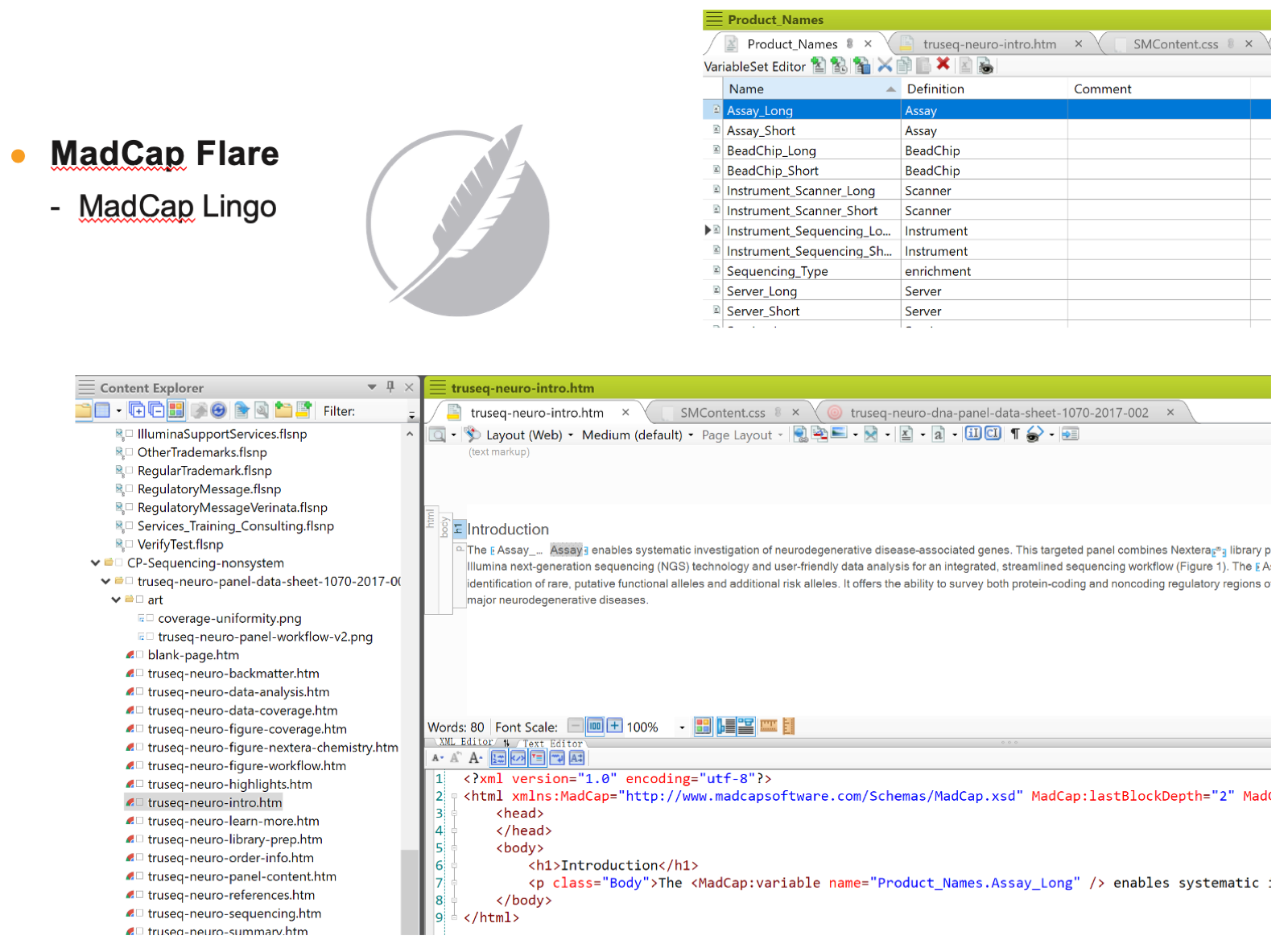
- Established a bilingual terminology base with 1,567 approved entries and a translation memory containing over 32,700 segments, enabling consistent reuse across content types.
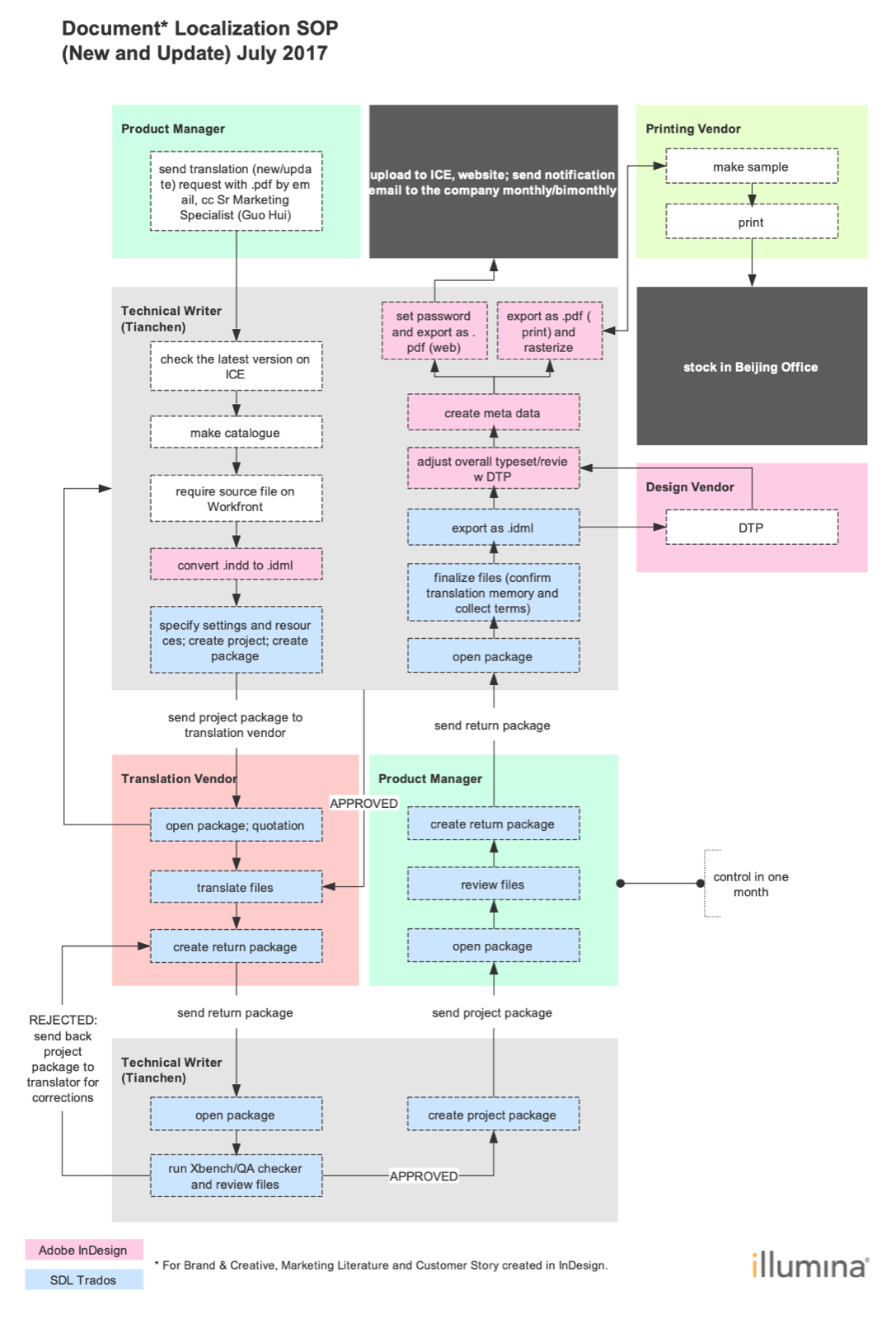
- Created localization style guides and SOPs for documents, newsletters, and video subtitles, providing authoritative references for vendors and internal reviewers.
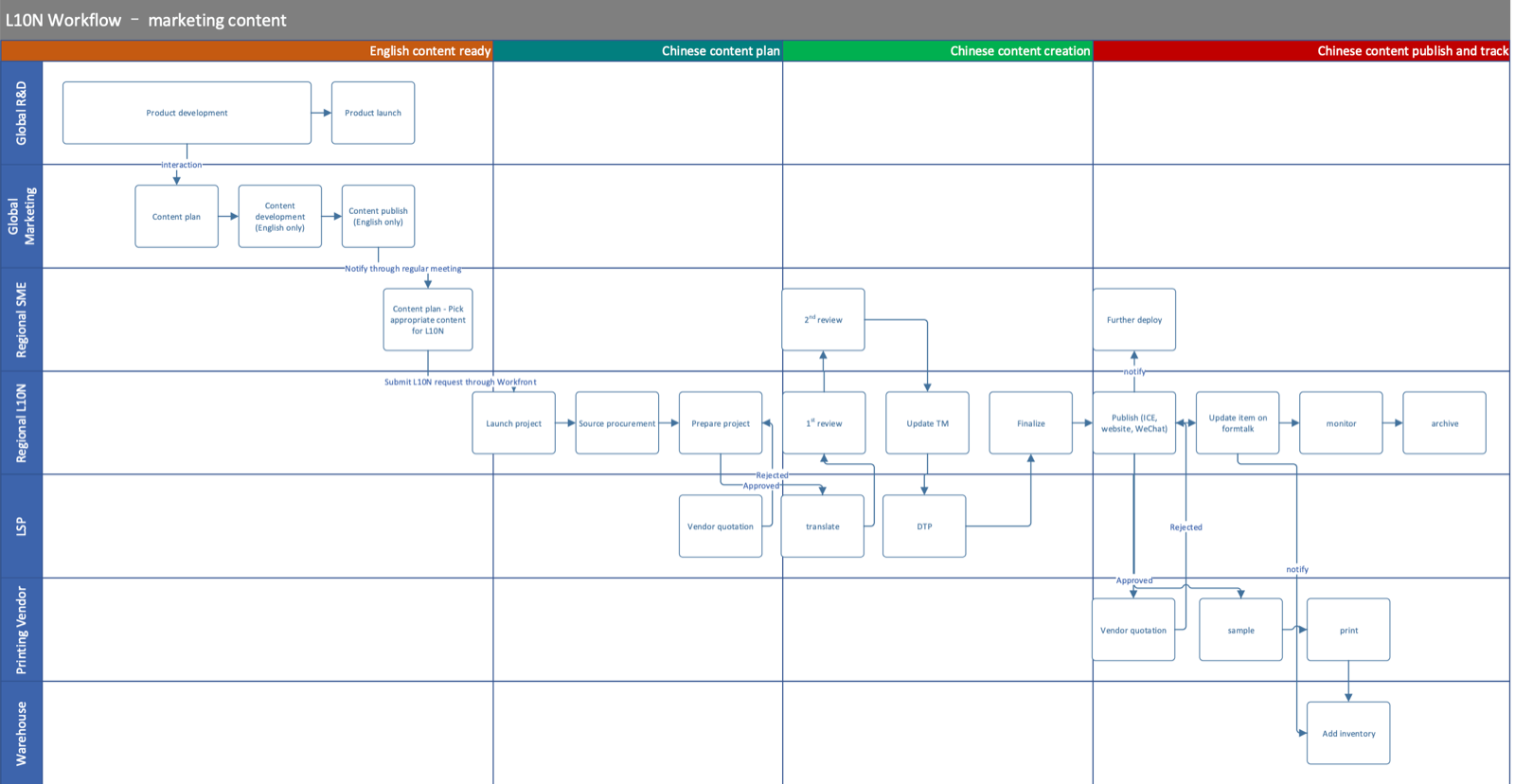
- Defined standardized workflows for documents, web content, videos, and print materials, clarifying roles, review stages, and quality gates.
- Introduced governance for vendor selection, cost control, printing rules, and warehouse management.
- Partnered with digital marketing to monitor content usage and performance across platforms such as ICE, websites, and video channels.
In parallel, I actively contributed to strategic initiatives including the Illumina China Documentation Center redesign, Illumina Academy (a localized learning platform), and the Illumina Chinese Naming project, leveraging my background in brand naming and language strategy.
Impact & Business Value#
- Over 1.23 million words of content were translated and managed under the new system within two years, with improved consistency and turnaround time.
- Content consumption increased significantly: 23,500+ document downloads and 1,800+ video views within five months, reflecting improved findability and relevance.
- Centralized terminology and translation memory reduced duplication, lowered localization cost, and improved linguistic quality across marketing and technical content.
- Clear workflows and standards reduced rework, shortened production cycles, and made localization outcomes more predictable for stakeholders.
- From a user perspective, localized content became easier to find, easier to trust, and more aligned with local scientific and clinical contexts—supporting education, adoption, and lead generation.